
Introduction: The Inseparable Link Between Mind and Learning
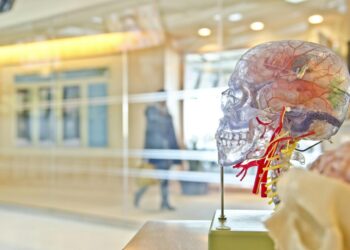
For a long time, the education system operated under the assumption that academic success was purely an intellectual pursuit, separate from a student’s emotional well-being. Classrooms traditionally focused almost exclusively on cognitive skills—reading comprehension, mathematical calculations, and scientific facts. This division created an artificial gap, suggesting that a student’s feelings, social skills, and emotional regulation belonged only to the counselor’s office or the playground. However, decades of psychological and neurological research have proven this separation to be profoundly flawed. The brain’s centers for emotion and cognition are deeply intertwined, meaning that stress, anxiety, or poor social relationships can create significant roadblocks to effective information processing and retention.
Students struggling with self-management or lacking strong relationship skills often find it incredibly difficult to focus in class, navigate group work, or persist through challenging academic problems. The simple truth is that a dysregulated or emotionally stressed brain cannot learn optimally. This realization has driven a critical paradigm shift in modern education, recognizing that social-emotional skills are not merely “nice-to-have” additions but are foundational prerequisites for all academic achievement. A whole-child approach is now understood to be the most effective strategy for fostering both intellectual and personal growth.
Social-Emotional Learning (SEL) provides a structured framework for teaching these essential life skills explicitly. While SEL programs are crucial, the most impactful practice involves moving SEL beyond isolated lessons and seamlessly integrating it into every core subject area—math, science, history, and language arts. This integration ensures that SEL competencies are reinforced constantly, making them relevant to academic rigor and everyday school life. By weaving SEL into the curriculum fabric, educators create an environment where students learn to manage emotions, empathize with others, make responsible decisions, and build positive relationships, all while mastering their academic subjects.
Section 1: Understanding the CASEL 5 Core Competencies
The Collaborative for Academic, Social, and Emotional Learning (CASEL) defines SEL as the process through which individuals acquire and effectively apply the knowledge, attitudes, and skills necessary to understand and manage emotions. They set and achieve positive goals, feel and show empathy for others, establish and maintain positive relationsh1ips, and make responsible decisions. These skills are grouped into five interconnected core competencies that serve as the foundation for successful integration.
Self-Awareness
This competence involves the ability to accurately recognize one’s own emotions, thoughts, and values, and understand how they influence behavior. It includes assessing one’s strengths and limitations with a well-grounded sense of confidence and optimism. In the classroom, this translates to students identifying when they feel frustrated by a math problem or excited by a history discovery.
Self-Management
This is the ability to regulate one’s emotions, thoughts, and behaviors effectively in different situations. It involves managing stress, controlling impulses, and motivating oneself to achieve personal and academic goals. Students who practice self-management can delay gratification, persevere through a difficult science lab, and organize their materials efficiently.
Social Awareness
Social awareness is the ability to take the perspective of and empathize with others, including those from diverse backgrounds and cultures. It involves understanding social and ethical norms for behavior and recognizing family, school, and community res2ources and supports. This skill is vital for understanding characters in literature or analyzing historical conflicts.
Relationship Skills
This competence involves the ability to establish and maintain healthy and rewarding relationships with diverse individuals and groups. It includes communicating clearly, listening actively, cooperating, resisting inappropriate social pressure, negotiating conflict constructively, and seeking or offering help when needed. These skills are directly used during group projects and peer review sessions.
Responsible Decision-Making
This is the ability to make constructive choices about personal behavior and social interactions across various situations. It involves considering ethical standards, safety concerns, and the consequences of different actions. Students use this when deciding how to structure a research paper or evaluating the ecological impact of an engineering design.
Section 2: Integrating SEL into Mathematics
Mathematics is often a source of significant anxiety and frustration for students, making it an ideal core subject for SEL integration. Embedding self-management and self-awareness strategies directly into math instruction helps students approach difficult problems with resilience and a growth mindset.
Fostering Self-Management through Problem Solving
Math problems that require multiple steps and sustained effort are perfect for teaching self-management. Teachers can introduce a “pause and plan” strategy before students begin. When frustration inevitably hits, students are taught to stop, take a deep breath, and reassess their strategy instead of giving up immediately. This explicit instruction in emotional regulation strengthens perseverance.
A. Normalize Struggle by discussing famous mathematicians who faced multiple failures before success.
B. Teach Error Analysis where students focus on what went wrong and why, rather than simply getting the wrong answer.
C. Utilize Reflection Logs asking students to describe the emotional journey of solving a complex problem and how they overcame the mental block.
Enhancing Relationship Skills in Group Work
Many collaborative math tasks require students to explain their reasoning, which naturally builds relationship skills. Teachers must structure group tasks with assigned roles to ensure equitable participation. Roles like “Explainer,” “Questioner,” or “Recorder” force students to practice active listening and clear communication. The success of the math task then becomes directly dependent on the quality of their communication and cooperation.
Connecting Math to Responsible Decision-Making
Mathematics provides direct context for responsible decision-making by linking concepts to real-world financial literacy or statistical analysis. Students can analyze data on budgeting, resource allocation, or public health trends. Discussing the ethical implications of manipulating statistics in the media promotes critical thinking and responsible use of mathematical information in a democratic society.
Section 3: Integrating SEL into Science and Technology
Science and technology are fundamentally collaborative and involve continuous failure in the pursuit of discovery. This provides a natural, low-stakes environment for teaching persistence, communication, and social awareness. The iterative nature of the scientific process mirrors the iterative nature of personal growth.
Self-Awareness and Resilience in Experimentation
Every science experiment or engineering design project involves trial and error. This is a powerful context for building self-awareness and resilience. When an experiment fails or a prototype breaks, the teacher can guide students to identify their immediate emotional reaction. Instead of reacting with frustration, students learn to view the failure as valuable data that informs the next attempt. This is the essence of a growth mindset.
A. Design Failure Logs where students must document their emotional state and the scientific conclusion drawn from a failed experiment.
B. Debriefing Sessions dedicated to discussing the challenge of ambiguity and how scientists cope with uncertainty.
C. Modeling Empathy by having the teacher share their own professional struggles or mistakes to normalize the learning process.
Promoting Social Awareness through Scientific Ethics
Science integration offers rich opportunities for discussing social awareness and empathy. Students can analyze the societal impact of new technologies, historical scientific controversies, or environmental issues like climate change. These discussions require students to consider multiple, often conflicting, perspectives. Analyzing case studies on bioethics or data privacy promotes a nuanced understanding of social responsibility.
Utilizing Relationship Skills in Engineering Design
Engineering challenges, which are common in STEM education, are rarely solved alone. They require highly effective relationship skills. Students working in engineering teams must negotiate ideas, compromise on design choices, and manage limited resources together. The teacher should grade not just the final product, but also the group’s documented process, including their conflict resolution strategies and division of labor.
Section 4: Integrating SEL into History and Social Studies
History and social studies are inherently focused on human interaction, conflict, and societal structures, making them the most direct avenues for cultivating social awareness, empathy, and responsible decision-making. The content itself provides the case studies for SEL competencies.
Cultivating Social Awareness and Empathy
History provides endless narratives for practicing social awareness and empathy. Students can be asked to analyze historical events or political decisions from the perspectives of diverse groups—those in power, those marginalized, or those directly affected by the consequences. This requires students to actively step into another’s shoes, a core SEL skill.
A. Perspective Taking Exercises where students write diary entries or speeches from the viewpoint of a historical figure they disagree with.
B. Analyzing Conflict Resolution strategies used by past leaders or groups, evaluating their ethical and social outcomes.
C. Socratic Seminars focused on current or historical social justice issues, requiring respectful dialogue and active listening.
Linking Historical Decisions to Responsible Decision-Making
Every historical event is the result of a chain of responsible decision-making (or lack thereof). Students can analyze political, economic, or military decisions and trace the long-term consequences on communities. This exercise teaches that decisions are complex and rarely have easy answers. This analytical process strengthens the student’s own ability to evaluate consequences before acting.
Using Relationship Skills in Civil Discourse
Social studies often involve discussing current, sensitive topics. This requires explicit training in relationship skills for constructive civil discourse. The classroom must establish clear norms for debate, such as “attack the idea, not the person” or “listen to understand, not just to reply.” These protocols model respectful disagreement and effective communication, essential democratic skills.
Section 5: Integrating SEL into Language Arts and Literacy
Language Arts, which focuses on reading, writing, and communication, is the backbone of emotional literacy. Through stories and self-expression, students gain critical tools for self-awareness, empathy, and relationship building. Literature becomes a safe laboratory for exploring human emotion.
Building Self-Awareness through Writing and Reflection
Writing assignments are powerful tools for building self-awareness. Journaling, personal narratives, and reflection essays allow students to process complex emotions and experiences safely. Teachers can integrate reflection prompts after reading a difficult text, asking students to connect the character’s struggle to their own past feelings. This practice strengthens the ability to articulate inner experiences.
A. Character Connection Prompts asking students how the conflict of a literary figure mirrors their own emotional challenges.
B. Mood and Tone Analysis requires students to identify the precise emotions conveyed by the author’s choice of language.
C. Reading Identity discussions where students reflect on their strengths and challenges as readers and set improvement goals.
Developing Empathy through Literature
Literature is perhaps the greatest tool for cultivating social awareness and empathy. Reading novels, poems, and short stories exposes students to diverse characters, cultures, and emotional landscapes. By emotionally investing in a character’s journey, students practice perspective-taking. Discussion should focus on the motivations and feelings of the characters, forcing students to consider actions from multiple emotional viewpoints.
Utilizing Relationship Skills in Peer Review
Peer review of writing is an intensive use of relationship skills and self-management. Students must deliver constructive criticism effectively (relationship skills) and receive criticism without defensiveness (self-management). Teachers must explicitly teach the mechanics of providing helpful, respectful feedback. The shared goal of improving the final product reinforces positive collaboration.
Conclusion: The Holistic Imperative of Modern Education
Integrating Social-Emotional Learning into core academic subjects is not an optional enhancement but a foundational necessity for 21st-century education. This unified approach recognizes that cognitive and emotional development are fundamentally two sides of the same single coin. The classroom, therefore, must function as a space that develops the whole individual, not just the intellectual capacity.
SEL integration ensures that emotional regulation and interpersonal skills are taught as relevant tools for academic success.
It actively mitigates anxiety and disengagement by teaching students how to manage their frustration and embrace a resilient growth mindset.
The practice enriches core subjects by using content—whether historical decisions or scientific failures—as case studies for ethical action and empathy.
It empowers students to become highly reflective learners who can accurately monitor their own understanding and set meaningful goals for themselves.
The result is a substantial improvement in student persistence, engagement, and the quality of their collaborative academic output.
By seamlessly weaving SEL into every lesson, educators fulfill the holistic imperative of preparing citizens who are as emotionally intelligent as they are academically competent.